Checkout our blog

We just talk about the good stuff

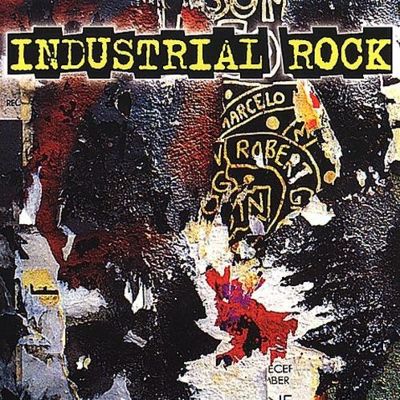
Industrial Rocks PR Movement

Industrial is a genre of experimental music, with those who partake in it called
“Industrialists,” built on transgressive and provocative themes expressed through harsh,
techno-mechanical sound. Its lyrical and thematic content favored controversial subjects and
used shock value as a tool for social critique rather than simple provocation.


The genre got its name from the British label “Industrial Records” formed in 1976 by the
band Throbbing Gristle. In the USA, Chicago label “Wax Trax” housed numerous Industrial Rock
bands, thanks to Al Jourgensen, as the founder of the band “Ministry”; they helped to develop
that industrial metal sound.

By the end of the 1980s, mainstream rock and roll was dominated by the more glossy,
over-produced bands singing about parties and luxury.
Punks wanted something raw, cynical, and that connected to their everyday struggles.
Industrial Rock embraced technology such as synthesizers and samplers, which then set the
standard for many industrial acts to come; Danceable rhythms seen in the subgenre known as
electronic body music (EBM) particularly accentuating dance beats; Heavy metal instruments
such as distorted guitars and thunderous drums of heavy metal with samplers and synthesizers;
Provocative lyrics that often dealt with sexual deviance, torture, and mutilation, making tension
and controversy part of the art form; and good melodic hooks that (while some industrial bands
are fiercely non-commercial) some bands were willing to embrace even though they were apart
of certain tropes seen in pop music.

Magazines like Maximum Rocknroll and independent labels like Fat Wreck Chords and
Epitaph Records created an accessible, underground network of basement shows and 7-inch
vinyl records that made young people feel part of an active movement. It was an easy tactic to
apply the genre to more impressionable audiences at an easier expense.

Industrial rock began its mainstream debut in the 1990s due to more recognized bands
such as Nine Inch Nails and Rob Zombie. A lot of the bands that got popular under the Industrial
Rock genre were shown on Music Television (MTV) and issued to radio stations without a
commercial single. As soon as music videos were released, they began to push broadcast
boundaries, generating free controversy and media coverage on outlets like MTV.

These labels and bands had the upperhand in the public relations department to
transform the abrasive, countercultural sound into a calculated aesthetic, leveraging shock
value, specialized subcultural hubs, and direct-to-fan distribution. Specialized record stores
such as Wax Trax built dedicated fanbases through trust, mail-order zines, and subcultural
word-of-mouth rather than the traditional corporate radio campaigns. As the internet became
readily available during the late 90s and early 2000s, artists began to reshape the intent of
public relations by leaking tracks and full free digitally distributed songs, turning their art into
controversy, into publicity.
Today we see Industrial Rock bands still thriving in their loyal underground fanbases,
specializing their marketing towards niche audiences, nostalgia, and digital concert advertising.
Happy Birthday Instagram

On October 6, 2026, Instagram celebrated its 16th birthday. What started as a simple
photo sharing app is now one of the most influential social media platforms. Instagram has gone
from a place to post pictures of everyday life into a platform for influencers, businesses,
entertainment, trends, and endless scrolling. As the app continues to evolve, the question
whether it has lost its original purposes rises.


When Instagram first launched in 2010, it was simple: capture a moment, add a filter,
and share it with your friends. In the beginning the app was centered around square photos,
vintage filters, and an active feed. Over time Instagram introduced stories, reels, and direct
messaging. Its physical appearance changed too, through logos, layouts, and its overall format.
Instagram is less about sharing your life and more about creating content that will attract
attention. Although Instagram has had many influential years, 2016 seems to be one that stuck
with many people. From the rise of curated feeds to big trends like the mannequin challenge. In
2026, the nostalgia of 2016 has returned as people repost old pictures, fashion, and music. You
could say this comeback shows people’s desire to reconnect with a time when posting was
more casual, personal, and fun. Instagram is now very different and the pressure to look good,
gain likes, maintain an aesthetic, and keep up has made the experience less enjoyable. There is
a competition for attention and the addition of reels has shifted the app toward content
consumption. Instead of sharing memories, people might find themselves comparing their lives
to selective versions of everyone else’s.


Another question is, if instagram was created to help people capture and share
memories, why do so many people have accounts with few or no posts? Someone could say it’s
for privacy reasons but others might say it’s because Instagram has become a place to watch
what everyone else is doing. They follow friends, celebrities, influencers, and trends while
quietly observing rather than posting themselves. This doesn’t mean Instagram has completely
lost the plot, but that its original purpose has become less central. The app still allows people to
keep memories and connect with others but it does allow for constant comparison and overconsumption. At 16, Instagram has grown up with a whole generation, changing the way people
communicate, express themselves, and view one another.

Overall I think the 2016 nostalgia can remind us that social media does not always have
to be about perfection. Maybe the question isn’t if instagram has changed but if we have
changed the way we used it. Are we still using instagram to capture our lives, or have we
become so focused on watching everyone else live theirs?

A First Time PR Student

During my first few years at Arcadia, I had no idea what I wanted to do in my career. Initially, I started out as a Chemistry major with a minor in Biology on the Pre-Forensics track (in the Accelerated Masters program). in short, I hated it. I’ve loved school and learning ever since I started attending at five years old, but once I ended up on this career path, I felt so miserable. Whenever it came to group, many of the STEM students would become very self centered and competitive. Which wasn’t a great environment for teamwork or collaboration. Instead, it was isolating, depressing, and the workload was too much for me. So, I decided to switch majors come spring. 

However, I had no idea what I was even getting myself into. I truly just picked whatever major that sounded the most interesting and the one I felt the most passionate about, which is why I am here today. Though I don’t see myself working in the field of PR, being a part of a student run organization has been a highlight of my year so far. From the creative ideas when planning activities to visiting our client’s site to just being able to collaborate with the students I work with, I realized this is exactly what I was missing in my freshman year of college. The ability to work as a team with others, something I take great pride in doing.

Through this experience, I managed to learn a few things about myself. Despite being introverted, I do have a passion for working with or for other people. Many of the students and teachers I work with, even outside of the PR field, are some of the most influential and knowledgeable groups of people I’ve had the pleasure of experiencing. I also learned that I seem to have a knack for event planning as well as writing, which seems small to me until I realize both actually take a lot of time, but again, they’re both something I enjoy greatly. So far, being a PR student has proven to me, in smaller ways, that my career can be filled with opportunities that make me feel more fulfilled rather than sitting in a room with faces I feel like I don’t recognize. Truly, I’m grateful for that.

Novig’s New Campaign: Is It Really “Just Sports”?

Fall is back, and you know what that means! It’s time for social media feeds to be filled with recipes for
everything pumpkin spice, edits of Gilmore Girls with just enough nostalgia to prompt a 10th rewatch,
ideas for “niche” Halloween costumes, hauls for extravagant Boo Baskets…


Oh, and of course, sports betting ads featuring a nearly-nude actress, covered only by hockey shin guards
and footballs. That’s right. In 2025, American Eagle tried to convince us that Sydney Sweeney had “great
jeans.” Now, Sweeney is working with Novig, a sports prediction market. For this campaign, she’s doing
away with the jeans (and all other clothing) to show audiences that Novig’s focus is “just sports.”
Following the release of this video advertisement on September 9th, 2026, people everywhere have
been posting about their disgust at Novig’s approach, with many specifically calling out Sweeney for
partaking in a campaign that counteracts the respect that women in sports work so hard to gain. Female
athletes in particular have spoken up, with many posting videos of them training and competing, using
the caption, “This is what women in sports really look like.” Ariarne Titmus, four-time Olympic swimming
gold medalist, wrote on Instagram, “How do we live in a world where monetizing a woman’s body and
sexualizing women’s sports is still a thing?” Although Novig was founded in 2021, this was their first
campaign, and a bold one, too.


When asked about this controversial approach, Novig’s CEO, Jacob Fortinsky, told Front of Office Sports,
“In some sense, it forces us into the national discourse.” Fortinsky also stated that Sweeney came to
Novig and was “interested in some kind of equity partnership” and even “helped craft that message,”
along with other aspects.


Sweeney has also responded to the backlash, telling Complex that the campaign was supposed to be “a
very simple and playful idea” that “brings the concept of ‘just sports’ to life.” Sweeney also posted
images on her Instagram story from ESPN The Magazine’s “Body Issue,” which featured naked athletes,
similar to the concept of Novig’s advertisement.


It is evident that the people at Novig are not attempting to diffuse the situation with a public apology or
other similar efforts. They have instead chosen to deflect the public’s response by claiming that the
campaign was not meant to cause harm and that similar strategies have been used by other companies.
The advertisement, like any other, is meant to grab attention. At a surface level, Novig’s approach is
understandable from a marketing perspective when we think about the amount of sports betting
advertisements that hit a variety of platforms around this time of year. Everyone uses celebrities, so how
they are used can heavily impact the success of the campaign. Among an influx of generic initiatives,
sales rely on concepts that stand out, even if that comes with widespread dispute. After all, negative
attention is still attention.

Yet, this still leaves the issue of who the audience actually is. Fortinsky made it clear with his post on
X/Twitter that “trading is for adults” and explained that users of Novig must be at least 21 years old.
Seemingly, Novig did not intend for the campaign to reach certain groups, such as children, who should
not be exposed to scandalous visuals. However, it’s 2026. With the vast utilization of digital media, was it
realistic to assume that the campaign wouldn’t reach younger audiences?


I don’t think so. Fortinsky’s defense dodges one very important fact: most viewers are not discovering
the advertisement on the Novig platform. They’re seeing it everywhere else. I came across the
advertisement while watching a movie on the streaming service Tubi. On this platform in particular, users
only need to be 13 years old to create an account. Even then, there are no formal ways of regulating
what age viewers are, and that goes for most streaming services, social media apps, and other sources of
digital content. Therefore, the age restriction that Novig’s platform has does not cover the span of the
advertisement.


Ultimately, the aftermath of the campaign has made this about much more than “just sports.” Viewers
are talking about whether or not Novig crossed the line. But, from a public relations or marketing
perspective, the conclusion of this discussion may not matter. Will Novig’s disrespect and lack of remorse
keep consumers away from spending money on Novig’s platform, or will the fact that we’ve even
entertained this conversation keep the company alive?

Semester wrap-up & Goodbye

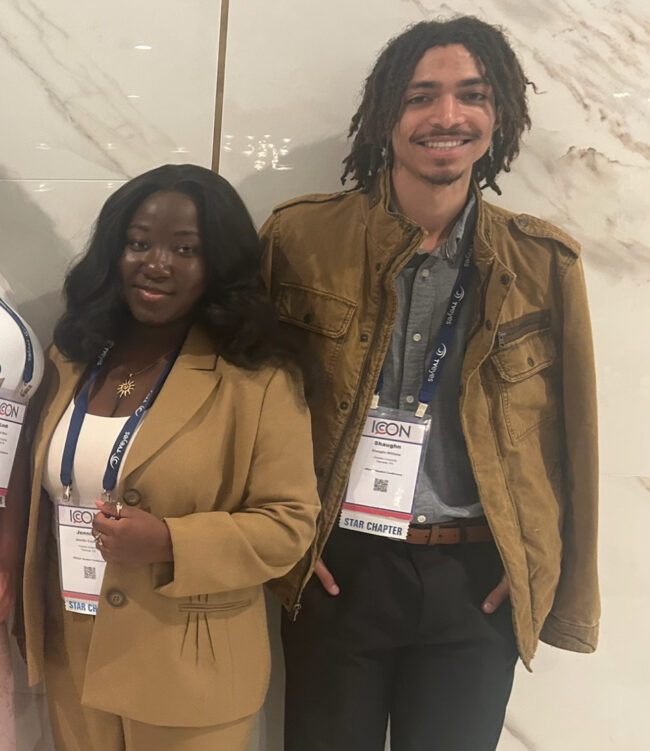
As we wrap up the semester, and both my senior year and my Co-President Shaughn’s, the
feeling is truly bittersweet. Looking back, the growth of the firm, as well as our own journey from
account executives to Co-Presidents, has been nothing short of remarkable. We’ve had the
opportunity to be part of several milestone moments, including being the first group to attend the
PRSSA ICON Conference in Washington, D.C., and the first to represent the firm at the Temple
District Conference. We also played a role in submitting the materials that led to our
recertification and recognition as a nationally affiliated PRSSA firm, while supporting multiple
clients through meaningful rebrands.
This experience has been more than just hands-on learning, it’s been genuinely transformative
for us as public relations majors preparing to enter the field. The skills, confidence, and
relationships we’ve built through 1853 Communications will stay with us long after graduation.
We’re incredibly proud of what this organization has accomplished and grateful to have been
part of its growth.
We wish 1853 Communications continued success and look forward to hopefully returning one
day as guest speakers, ready to inspire and support the next generation of PR professionals.

Professional Development – PRSSA District Conference 2026

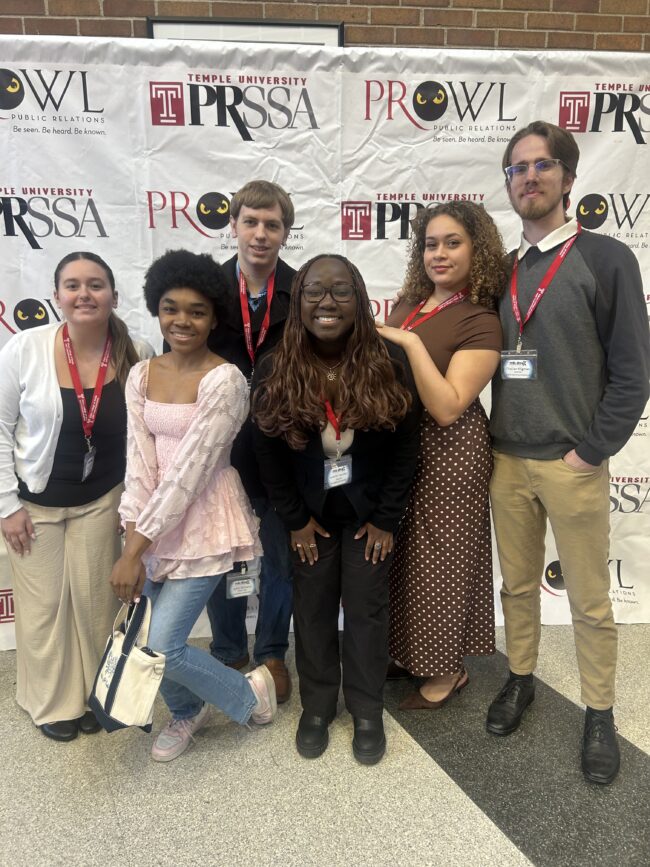
During March 28, 2026 myself and my fellow peers traveled to Philadelphia to partake in Mic Drop: PR in Entertainment Public Relations Student Society of America (PRSSA) Mid-Atlantic District Conference, which was hosted by Temple University.

This was my second time with 1853 communications and I have been extremely humbled to join my fellow colleagues once more at this event. I connected with many different Public Relations students. Not just Temple University, but from other colleges across the country.

Similarly to my first experience with this event, we met with multiple speakers during the beginning of the event before breaking off into smaller “breakout” groups. I was joined by my fellow Knights in the first session hosted by Tiara Robinson who gave an immaculate presentation about being an event planner at Warner Bros. Tiara gave valuable insight about the PR world through her lecture and I think it really set the stage for the seniors of my group who will be taking the next steps of their journey very soon.

Our second and possibly our favorite breakout session was hosted by Kate Marlys Rodgers who is the owner and founder of Philly PR Girl LLC. She is also an adjunct Professor at Temple University, and her presentation was nothing short of fantastic! Her presentation felt like a college lecture with expert insight, creating a unique flavor of familiar and knowledge. It reminded me of my own professor who not only worked in PR but has a knack for teaching it too. Kate took the time to connect with all of us after her session and even talked about internship opportunities at Philly PR Girl. Two of my fellow Knights returned to class soon after our trip to announce that they had been accepted as interns, hats off to them!

My favorite part about this conference is the fact that even if you’ve been before, you never know what to expect. There’s knowledge around every corner and I can only imagine how fun the next conference will be.

Zendaya’s 2026 Takeover

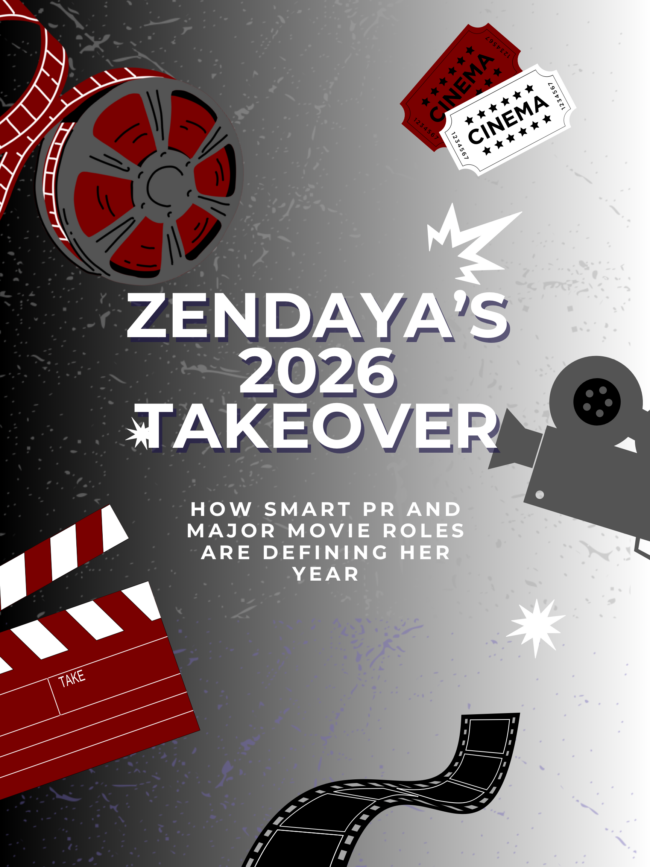
There has been a lot of buzz that 2026 could be Zendaya’s year for many reasons. From a PR
viewpoint, this year will be about consistency and visibility for her. As we have already started to
see, Zendaya will be everywhere, in interviews, on red carpets, social media, and press tours
that overlap. So even when she is promoting one movie, people are already hearing about the
next one. That kind of consistency keeps her name trending and makes it feel like she is taking
over the industry this year. Another layer to this is that her projects are very different, which
allows her to reach different audiences. This makes her PR team’s job a little easier because
they don’t have to do as much to reach different people; the projects are already designed that
way. First, there’s The Drama, which is a more emotional film. This project helps connect
Zendaya with critics and film festivals. This film positions her as a serious actress. Then there’s
The Odyssey, a large cinematic movie where she plays a more mythological role. This movie
puts her at a high level automatically because it was directed by Christopher Nolan, who is a
well respected director. Next is Spider- Man: Brand New Day, which is probably the most
mainstream project. This movie keeps her connected to a large fanbase and allows her to stay
relevant to all ages. Lastly, there’s Dune: Part Three, this series is visually huge and very
respected. So this movie mixes blockbuster success with artistic credibility. When you look at all
these films, a PR strategy becomes extremely clear. Zendaya is everywhere, but in different
ways, which makes her versatile. Her year of buzz was very strategic and was created so she
could be unavoidable to all audiences.

April 22nd, More Than Just Earth Day

April 22 is a day for taking care of the Earth. A lot of people know it as a day to think
about the environment, Earth Day. Back in 1970 it was a major turning point for the US
government and how it handles the environment. On April 22nd, 1970. President Richard Nixon
signed an order that created the Environmental Protection Agency aka EPA. The EPA brings
together environmental responsibilities under one agency. This change has had an impact on how
the US deals with pollution and protects people’s health and manages natural resources.

In the 1960s the US faced many environmental problems. Big cities had air pollution,
rivers were dirty from waste. One of the shocking incidents happened in 1969 when Ohio’s
Cuyahoga River caught fire due to pollution. This got a lot of attention from people across the
country. As a result many Americans started to worry about the environment. On April 22, 1970
millions of people took part in demonstrations and events to raise awareness about issues. On
that day, President Nixon made it official. The federal government was committed to fixing
environmental problems and thus the EPA was created.

Before the EPA environmental responsibilities were spread out across different
departments. This made it hard to enforce rules and hold people accountable. By bringing these
responsibilities under one agency the government aimed to make regulations stronger and more
consistent. The EPA has been able to set and enforce standards for air and water quality. It has
also helped develop guidelines for protection based on scientific research. The agency’s job is not
just to enforce rules but to research, monitor pollution and educate people about environmental
risks. The creation of the EPA showed that the federal government took protection seriously. It
was no longer seen as an issue but as a key part of public health and economic sustainability. The
EPA has played a role in implementing important laws like the “Clean Air Act” and the “Clean
Water Act.”

These laws have helped improve air and water quality across the country. Today the EPA
oversees areas that affect environmental health. While there are still debates about regulation and
economic balance, the foundation created on April 22 remains strong. Looking back to the
significance of that day lies in the changes it brought to the government’s approach to the
environment. The creation of the EPA showed how a change in government structure can have a
lasting impact on policy.

April 22, 1970 is a key moment in environmental governance. It shows how leadership
decisions, shaped by demand and national challenges, can establish lasting systems of
accountability. Now the EPA continues to influence environmental standards and public health
protections throughout the US. When thinking about April 22 the focus is on a policy change that
reshaped the federal government’s role in protecting the environment. This change continues to
affect communities, industries and ecosystems across the country.

Spring Break Isn’t a Break for Public Relations

When you think of Spring Break, the first things that come to mind are traveling and
relaxing. Maybe you plan on taking a trip with friends or just reconnecting yourself with
family. With all of these hot vacation spots and events going on during this 1-2 week
period, public relation professionals are the busiest. This is a good opportunity to
connect audiences with what’s currently happening and increase visibility. Many
different companies take advantage of Spring Break. Hotels and airlines are the main
ones who benefit from this, with deals and campaigns. Public relation firms are
constantly working behind the scenes, from helping brands host sponsored events, to
companies hopping on viral trends to attract more people. It’s all about timing,
exposure, and making sure brands stay relevant.

Not all schools will have Spring Break at the same time, along with how fast paced
everything is. It can create opportunities and the same amount of risks. A popular
Expedia bundle might only be available during a time when most students are not on
break yet, meaning they won’t really get the type of traction they were looking for. One
trendy post from a brand trying to promote their Spring Break deal or just put their
business out there, may be controversial to some. Public relation teams would have to
work hard to monitor engagement, and be prepared to handle any negative feedback.
For example, if a travel company were to post a TikTok listing different vacation
packages they offer and include countries that may not be partially safe to go to…people will respond negatively. It is up to public relation professionals to help navigate how to
deflect the negative response. The post had the right timing, due to it being Spring
Break, but it wasn’t ideal for its audience. That constant need to adapt to patrons’
reactions shows how public relations is not just about brand promotions, but also about
maintaining credibility and building brand trust in real time. During Spring Break and
every other holiday or popular break, it is important for pr teams to stay alert and
responsive.

Spring Break is just another way for people to see that the public relations field is
nonstop. It heavily depends on understanding trends, people, and even timing. The need
for content creation and online engagement during these break periods or holidays
make it easier to spread a message quickly, but it also increases the risk of whether or
not the message is right for the target audience. Spring Break is a good real world
example of how powerful and immediate public relations can be. Managing public
image and handling people’s real time reactions never stops. The next time you see a
promotion for anything, take the time to think to yourself, “How much effort went into
making this? How many people did this idea and concept have to go through before
reaching me?

Animations that Build Reputations: How Anime is Shaping Global Perception

For a long time, anime was often seen in the United States as aniche interest connected mainly
to dedicated fan communities. However that perception has been changing quickly. With the
growth of streaming services, social media, and online fandom spaces, animation has become a
mainstream form of entertainment watched by people of different ages and backgrounds.
Although Japan has historically dominated the industry, China and South Korea are becoming
increasingly important contributors. Their growth shows something important for public relations:
media and entertainment can act as a communication strategy, not just content.
One of the main reasons for this shift is South Korea’s webtoon industry. Webtoons are digital
comics specifically designed to be read on smartphones, which makes them extremely
accessible for modern audiiences. Many of these webtoons are now being adapted into
animated shows distributed through global streaming platforms. Because viewers emotionally
connect with the characters and stories, they also become familiar with Korean culture, settings,
and social values. Korea is no longer only exporting music and TV dramas; it is now expanding
into animation and creating intellectual property that reaches audiences worldwide. This helps
the country maintain relevance in global media conversations.
China is also expanding its animation industry, commonly referred to as donghua. Chinese
studios are producing a large amount of animated content and distributing it online to both
domestic and international audiences. Since people increasingly watch shows on phones and
laptops, animation travels easily across borders. As a result, China and Korea are not just
consumers of media anymore but producers that shape what global audiences watch. This shift
shows that animation has become a form of cultural influence rather than simply entertainment.
This development connects directly to public relations because PR focuses on shaping
perception and building relationships with audiences. Countries can have reputations just like
corporations do. When viewers form emotional attachments to characters, they also develop
positive associations with the culture those characters come from. Instead of persuading
audiences directly, the media encourages them to learn about language, food, traditions, and
social norms through storytelling. In PR terms, this functions as long-term reputation building
rather than short-term promotion.
Companies have already noticed the communication value of anime. Many brands partner with
animated franchises to attract younger audiences and appear culturally aware. Character
collaborations, themed products, and promotional events generate attention because fans feel
personally invested. This reflects an important PR principle: communication is more effective
when audiences want to participate. Anime fandoms actively create online discussions, share
artwork, and recommend shows to others, which spreads awareness organically. The message
travels further because it comes from the audience rather than directly from the organization.
The growth of animation in China and Korea also demonstrates how public relations has shifted
toward two-way communication. Fans constantly interact online by posting reactions, theories,
and edits. This user-generated content acts as free promotion and strengthens loyalty at the
same time. Instead of organizations controlling every message, the public now influences how a
brand or even a country is perceived.
Overall, the rise of anime in China and Korea shows that public relations is no longer limited to
press releases or corporate messaging. Storytelling has become one of the most effective
communication tools. Animated series create emotional conections, comunities, and
international recognition, which are all central goals of PR. As media continues to globalize,
successful communication strategies increasingly resemble entertainment instead of traditional
advertising.
Understanding this trend is important for future PR professionals. Organizations that recognize
the impact of culture and fandom communities can build stronger relationships with their public.
The growth of animation shows a key lesson: people trust stoies more than direct promotion,
and when audiences care about a story, they’ll share it with others.

Privacy Settings
We use cookies to enhance your experience while using our website. If you are using our Services via a browser you can restrict, block or remove cookies through your web browser settings. We also use content and scripts from third parties that may use tracking technologies. You can selectively provide your consent below to allow such third party embeds. For complete information about the cookies we use, data we collect and how we process them, please check our Privacy Policy
Youtube
Consent to display content from - Youtube
Vimeo
Consent to display content from - Vimeo
Google Maps
Consent to display content from - Google