Novig’s New Campaign: Is It Really “Just Sports”?

Fall is back, and you know what that means! It’s time for social media feeds to be filled with recipes for
everything pumpkin spice, edits of Gilmore Girls with just enough nostalgia to prompt a 10th rewatch,
ideas for “niche” Halloween costumes, hauls for extravagant Boo Baskets…


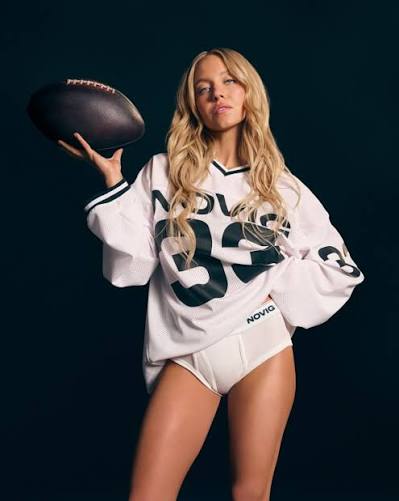
Oh, and of course, sports betting ads featuring a nearly-nude actress, covered only by hockey shin guards
and footballs. That’s right. In 2025, American Eagle tried to convince us that Sydney Sweeney had “great
jeans.” Now, Sweeney is working with Novig, a sports prediction market. For this campaign, she’s doing
away with the jeans (and all other clothing) to show audiences that Novig’s focus is “just sports.”
Following the release of this video advertisement on September 9th, 2026, people everywhere have
been posting about their disgust at Novig’s approach, with many specifically calling out Sweeney for
partaking in a campaign that counteracts the respect that women in sports work so hard to gain. Female
athletes in particular have spoken up, with many posting videos of them training and competing, using
the caption, “This is what women in sports really look like.” Ariarne Titmus, four-time Olympic swimming
gold medalist, wrote on Instagram, “How do we live in a world where monetizing a woman’s body and
sexualizing women’s sports is still a thing?” Although Novig was founded in 2021, this was their first
campaign, and a bold one, too.


When asked about this controversial approach, Novig’s CEO, Jacob Fortinsky, told Front of Office Sports,
“In some sense, it forces us into the national discourse.” Fortinsky also stated that Sweeney came to
Novig and was “interested in some kind of equity partnership” and even “helped craft that message,”
along with other aspects.


Sweeney has also responded to the backlash, telling Complex that the campaign was supposed to be “a
very simple and playful idea” that “brings the concept of ‘just sports’ to life.” Sweeney also posted
images on her Instagram story from ESPN The Magazine’s “Body Issue,” which featured naked athletes,
similar to the concept of Novig’s advertisement.


It is evident that the people at Novig are not attempting to diffuse the situation with a public apology or
other similar efforts. They have instead chosen to deflect the public’s response by claiming that the
campaign was not meant to cause harm and that similar strategies have been used by other companies.
The advertisement, like any other, is meant to grab attention. At a surface level, Novig’s approach is
understandable from a marketing perspective when we think about the amount of sports betting
advertisements that hit a variety of platforms around this time of year. Everyone uses celebrities, so how
they are used can heavily impact the success of the campaign. Among an influx of generic initiatives,
sales rely on concepts that stand out, even if that comes with widespread dispute. After all, negative
attention is still attention.

Yet, this still leaves the issue of who the audience actually is. Fortinsky made it clear with his post on
X/Twitter that “trading is for adults” and explained that users of Novig must be at least 21 years old.
Seemingly, Novig did not intend for the campaign to reach certain groups, such as children, who should
not be exposed to scandalous visuals. However, it’s 2026. With the vast utilization of digital media, was it
realistic to assume that the campaign wouldn’t reach younger audiences?


I don’t think so. Fortinsky’s defense dodges one very important fact: most viewers are not discovering
the advertisement on the Novig platform. They’re seeing it everywhere else. I came across the
advertisement while watching a movie on the streaming service Tubi. On this platform in particular, users
only need to be 13 years old to create an account. Even then, there are no formal ways of regulating
what age viewers are, and that goes for most streaming services, social media apps, and other sources of
digital content. Therefore, the age restriction that Novig’s platform has does not cover the span of the
advertisement.


Ultimately, the aftermath of the campaign has made this about much more than “just sports.” Viewers
are talking about whether or not Novig crossed the line. But, from a public relations or marketing
perspective, the conclusion of this discussion may not matter. Will Novig’s disrespect and lack of remorse
keep consumers away from spending money on Novig’s platform, or will the fact that we’ve even
entertained this conversation keep the company alive?

PR in London’s West End

London’s theatre district, the West End, experienced a new wave of fans this summer, when the London Palladium theatre opened its doors to Evita, starring Rachel Zegler. This revival, directed by Jamie Lloyd, was a PR success in many ways. To start, all press is essentially good press, and the casting of Zegler was already somewhat controversial. There has been intense media attention surrounding Zegler since her debut in Steven Spielberg’s West Side Story. However, Evita changed the narrative around Zegler, transforming her public image from negative to positive, utilizing her undeniable talent as a way to rebuild trust with audiences, reminding them why she rose to fame in the first place.

            Jamie Lloyd is known for breaking barriers and experimenting with the way musicals are staged, and what he did with Evita’s Act 2 ballad, “Don’t Cry for Me, Argentina,” was no exception. During the musical, Eva Perón, played by Zegler, is addressing the people of Argentina, claiming to be one of the people despite her wealth. While typically what’s happening on stage stays on stage, in Evita’s case, Zegler leaves the stage to sing on the balcony to a waiting audience outside the theatre. While this is all happening live, a cameraman is filming Zegler, and it is being projected onto the stage for the audience inside.

This directorial move gained lots of attention from the media, with videos surfacing of Zegler rehearsing on the balcony before the show was open to audiences. From there, the excitement only grew; every performance, crowd sizes grew outside of the Palladium. Fans and onlookers covered the street and blocked businesses, with people waiting for Zegler to make her Act 2 appearance. This not only represented a deeper meaning to the song being performed, but also opened up the theatre, which can be exclusive due to pricing and location, to the general public.

Evita was a PR success due to its accessibility, the staging of it, and the credible talent. I had the pleasure of seeing this production over the summer, and it was surreal as someone inside the theatre watching her perform to people outside of it, and yet incredibly moving. This experience showcases how intentional PR-focused staging can extend a production’s reach beyond the theatre walls and transform a performance.

PR in the NFL

When we think of the NFL, we think of sold-out stadiums, thrilling touchdowns, and long Sunday football marathons. Behind all of the action, though, there is another key player that doesn’t step onto the field on game day, which is public relations. Public relations will never be the lead story, yet it is one of the main reasons the NFL continues to thrive, both as a sports league and as a global brand. Not only as a sports league, but as a global brand. Here’s why it’s essential in keeping the league in business and bringing fans back for more.

Every team has its own brand, whether it’s leaning into tradition, opting for flash, or specific branding. Public relations professionals are the ones shaping the way the league is perceived, making the NFL feel bigger than the sport itself. It’s the reason the Super Bowl has the feeling of a national holiday and not just another game. The NFL is always in the news, whether it’s post-game interviews, draft day, or trade rumors. Public relations personnel dictate how players and coaches interact with the media so that the league’s storylines are good and interesting. And sometimes they even do damage control after something was either said or done that shouldn’t have been, because otherwise, the headlines would be much uglier.

Public relations also focuses on the NFL’s community work. Their cancer awareness campaigns, for instance, or their military appreciation games that remind fans the league cares about more than wins and losses. And honestly, those moments resonate just as much as a big play on the field. There are the must-see narratives each season, like the underdog team getting a streak, the comeback star or team, and the fierce rivalries. PR knows how to spin these tales so that the fans stay interested because football is not always about the score, but also the drama. The NFL has its fair share of dramas. From player controversies to disagreements to love life, things can get out of hand. That’s when public relations steps in to calm the ruffled feathers and make sure that the league doesn’t completely drop the ball on its reputation. Players today are not just athletes, they’re also brands. Public relations helps them stand out by managing their social media, interviews, and charitable causes. That’s how a player like Travis Kelce can go from Pro Bowler to household name.

Public relations will never get the glory, but it’s the behind-the-scenes MVP. It’s what keeps the NFL looking shiny, makes players marketable, and makes fans come back week after week. And without public relations, the NFL wouldn’t be the culture it is today.

PR Tips: What I’ve Learned From Being in a Student PR Firm

When working in a PR firm, I at first didn’t know what to expect. Sure, I had taken a PR class before when studying abroad, but within that class we just practiced doing PR work among different designated groups in class. 1853 Communications was a whole different animal though, as I’d be working with actual organizations outside the class. I didn’t know what to expect, and as someone who was at the time potentially looking at going into PR work, that scared me. However, once starting the class and doing work within it, things got easier, and I’ve learned a great deal thus far. There are many things I wish that could’ve been shared with me in advance which would have benefitted me in my own growth while working with PR, so today, I’ll do my best to impart some of these handy tips and tricks I’ve learned to you.

One of the best things you can do is take notes on the organizations you’ll be working with when they come to meet your firm. While taking notes isn’t exactly required for the class, there’s many benefits to doing so. For starters, note taking allows you to retain information better. While notes on the organizations you’ll be working with will be provided by the teacher, taking notes while they’re there allows you to organize information you collect on them, as well as allows you to formulate better questions to ask the group while they’re there. Another good reason for these notes is that they’ll allow you to do your own independent research outside of class time. Since you only meet once a week, doing work outside class time is very important to keep up with the work, and will also free up more of your class time so you’re able to stay on schedule, as well as work ahead or focus on other aspects of whatever you’re doing. While you might think that taking notes is only something you do in school, oftentimes jobs after education require scenarios where you’ll need to do so. PR work is one of those jobs, especially when it comes to meeting with your customers. Once graduated, no higher authority is going to be there to take notes for you so you can do your work after, so it’s best to get into the practice now so you’re prepared later on.

Another thing I wish I would’ve known more about is teamwork. In school, most of the time you’re working alone on projects and essays, and you’re taught to take charge of your studies. Group work isn’t a normalcy, especially due to the fact that most students hate it (because let’s face it, unless there’s repercussions for it, you’ll most likely have a slacker in the group you have to pick up the work for), and teachers seem to recognize this. In PR firms though, this is the exact opposite. Sure, you have your own individual assignments that you’re tasked with, but everything is a group effort. If one person tries to control every aspect of a project, things are bound to get out of hand, and if you’re unable to trust your fellow coworkers and work well with them, the same can be said. Learning to cooperate as a collective and not just thinking about your own work is imperative for PR work, otherwise you’ll flounder. You’ve got to accept that there are things out of your control, and to trust your fellow workers as they trust you.

Promoting Awareness in PR

September is National Childhood Cancer Awareness Month. Through the lens of public relations, I’ve come to realize how interconnected PR and this awareness month truly are. I first learned about September’s significance for pediatric care through a Major League Baseball team, the Philadelphia Phillies. Since the beginning of the month, NBC Sports broadcasters have been highlighting childhood cancer during each game. Every night, the team honors a young hero, with announcers Tom McCarthy and John Kruk sharing the child’s story and photos on television. By doing this, the Phillies are not only raising awareness but also bringing attention to those who have suffered.

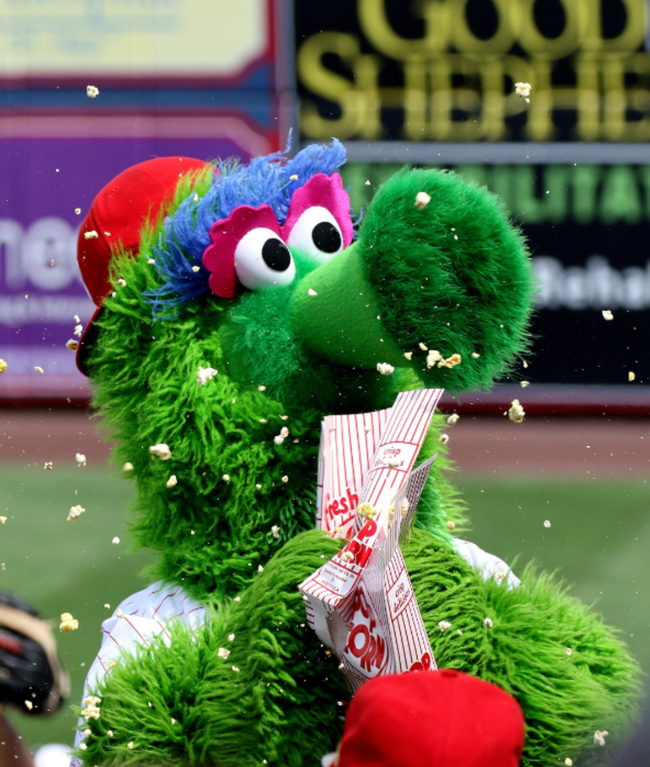
A standout moment occurred about two weeks ago when a young girl, Rosie McKenna, returned home to find her bedroom transformed by volunteers from the Phillies organization. Before that, she and her sisters were greeted by the team mascot, the Phanatic, at their dining table! Her bedroom now features a mural of Aaron Nola pitching, a ceiling adorned with baseball cards of current and retired players, and a signed baseball by beloved DH, Kyle Schwarber. These efforts show that the Phillies are not only raising awareness about pediatric cancer but also humanizing the issue in a way that resonates with their audience.

In PR terms, the Phillies are major influencers for Childhood Cancer Awareness Month in Philadelphia. On September 2nd, they partnered with Nemours Children’s Health to honor children in various ways. During a pregame event, dozens of kids participated in various activities. For example, the ceremonial first pitch was thrown by Eric Newton (age 14) and was caught by Dr. Jonathan L. Powell, a pediatric hematologist-oncologist. Children also took the field with players for the national anthem, performed by Arianna Barricelli (age 23), who had eye cancer in her youth. Another special moment included Margo Macchione (age 6) “hitting” a ceremonial home run and running the bases with Shortstop Trea Turner.

These strategic PR efforts by the Phillies have effectively spread messages about childhood cancer. They illustrate how partnering with sports teams or public figures can make a significant impact by reaching large audiences. The emotional connections displayed on television encourage fans to donate to research and pediatric care hospitals. By sharing numerous stories and interviews during the games, these PR practices also inspire people to volunteer and support research and treatment.

Influencers play a crucial role in PR, especially when advocating for social causes and mobilizing community support. The Phillies’ campaign exemplifies how PR can go beyond traditional advertising, using personal stories and community involvement to drive both emotional and actionable responses. Other PR agencies should take note of this successful partnership, as it demonstrates how effective strategic PR can be in addressing and supporting significant social issues.

My Experience As A PR Intern

I worked as an intern for Vizion Group, a Berwyn-based Public Relations agency in the fall semester of my senior year at Arcadia University. Going in, I didn’t expect much of it to particularly interest me and IU wasn’t exactly super excited about it. I treated it as just something I had to do to graduate and that it wouldn’t be something I enjoyed at all. However, the internship turned out to be very enlightening for me, not only about the industry of public relations but about working life as a whole. Even though I worked a lot of hours and put a lot of time into it, I felt like I was able to learn a tremendous amount, while simultaneously contributing good and valuable work to the agency.

            Vizion Group is a small company that runs the public relations work for two major NBC broadcasted events, as well as other miscellaneous events throughout the year. In the Winter and Spring, the agency works toward the Lake Tahoe Celebrity Golf tournament, and in the summer and fall they work to put on the National Dog Show, which was the majority of what I worked on. At first, I didn’t know anything about the National Dog Show, but I learned a lot about the event itself and about the other events that would lead up to it during my internship. I started slowly and my boss gave me a lot of time to get acclimated to what he was looking for me to do. One of the greatest things about the internship was that I got to do valuable things, but without any of the pressure of the quality or the deadlines because my boss was so on top of everything and thoughtful.

            As I grew more comfortable within the first few weeks or first month, the workload would gradually increase, especially with the main event and other events closing in. While there was some “grunt work” or ‘document keeping’ that I had to do, I appreciated a couple of things about it.  One was how every day that I would go into my internship, it would be something new to do or something different than the previous day. I really enjoyed this aspect because even though we were almost exclusively working on the National Dog Show, it never felt stale.

The second reason is that even with ‘document keeping’ I still felt massively involved and in the know of things I never expected I would be. Since my boss was the head of PR for the National Dog Show, I regularly got to listen and sit in on some of his meetings with NBC Executives, people in the Kennel Club of Philadelphia, and other people involved with the event. With some of my roles in the office too, I kept up to date with the handling of promotional advertisements and media schedules which had some big appearances on national talk shows. While I didn’t have any particular influence or decision-making, I felt like I was in the loop and am grateful that I got to see how high-level PR executives work on some of the bigger things in real-time.

However, while at my internship I also got to do a lot of valuable things that would directly contribute to the event. I wrote a blog that was published on the Kennel Club of Philadelphia’s website and also worked on a number of media alerts, fact sheets, and press releases for several things around the main event or other events that led up to the big show. I also even got to write scripts for an award ceremony at the main show but also for the pre-event press conference that was read, as well as writing promotional content after the big show that was published by a big magazine in the world of dog shows. For the event, I was the main one handling the media and VIP credentials and worked the Media and VIP table at the event. There were even more other daily projects and tasks that I had on top of that which contributed to the internship never feeling stale or redundant.

Overall, I got to not only do a lot of things that directly transfer over to the public relations industry, but also got to sit in and experience how high-end PR executives operate. I got to see the balance between the fun and creative stuff, as well as how challenging it can be to manage so many moving parts in a big event. I feel like I have a good idea of what the expectations of me would be as a public relations worker in every capacity and any situation. I am grateful for the experience, and it really opened my eyes to everything that the public relations industry can encapsulate.

My Experience At 1853 Communications

1853 Communication is a student-run public relations firm that gives students the
opportunity to operate in an office-like environment. Providing real world experience this class
showed me the importance of everyone doing their part to achieve a goal. Before taking this
class I had no idea what public relations actually was and what it was used for. I believed that
PR is just to make something look good so that it will make people want to buy, listen, or watch
whatever that product is but this class has shown me that it is much more than that. Public
relations is informing the public and giving them important information about specific issues. It is
also used to connect companies or people to the public and give an insight of what or who they
are so that they can have the support of the public. This class truly felt like we were working in a
PR firm in the way that we worked together to get work done but also as we worked individually.
Being a student working for a student agency was an awesome experience because it opened
my eyes to a world of public relations and jobs that are available that I didn’t know existed
before. This PR firm allowed everyone to grow in their skill with creating fundraisers, making
newsletters, PR trips, important speakers, and writing fun articles. This student firm has
enlightened me on what it takes to be a part of a well run public relations firm and shape my
understanding of the field.

Research in PR

Research is one of the most important steps before communicating with the rest of the world, especially when it comes to maintaining Public Relations. With Public Relations, not knowing the proper information about the praise or complaints for or against the group you represent can lead to a terrible public image resulting in mistrust from the public. But when studying what to do two important factors must be looked into for the best outcome.

Knowledge of the audience

Knowing who the intended audience is for you is an important step to get the best response. If the audience is a certain group of people then you need to know who they are and what they support. If the people that you need to communicate about in PR are those supportive/were supportive of your group that you’re speaking on behalf of, then you need to see what got them to talk about your group. If it’s for a negative reason then a PR statement needs to be made on behalf of your group to try and make amends with them for whatever reason. However, If the group is neutral or was seemingly always against your group for whatever reason, it might be best to try to get them over your side. Researching what your group did wrong from the perspective of any group is a necessary step in remedying the situation in a negative light, listen or read any problem they may have. See how your group could change, note this could result in isolation from supporters because it’s something they might not like, so be cautious with the decision making.

Know the subject

Knowing the subject you’re addressing is a simple thing but it’s also something that some in Public relations miss on that results in later mocking and scrutiny from detractors. Researching what your group did whether right or wrong in the eyes of a group is a necessary step to continue success.

The subject can almost be anything, but some examples can be related to a product, allegations on company practice, inner company culture, an unofficial or official statement from an employee or any action an employee might have committed is necessary to see what went right or wrong. It might also be good to study law on an issue if whatever is used against your group is from a legal standpoint. It’s also good to keep in contact with those dealing with the situation, such as the higher ups as they will be looking towards you to communicate what they say. If possible and with permission, it’s also good to relay updates about the subject more and more to the audience to keep them informed on the ongoing situation. While relaying information, try to gauge public reaction to the information. Make sure to remain accurate with the information as that can come back to haunt you later, which can result in more Public Relations problems in the future.

Conclusion

Once these two factors have been researched, you can respond in any way you can. If people like what you’re doing then it’s best to continue with that path the best you can or change if necessary.

The Power of Influencer Marketing in Public Relations

In the world of public relations, making real connections with people is important. Since social media has now become a huge part of our everyday lives, influencers play a crucial role in shaping public perceptions. This kind of marketing is beneficial because it allows more people to be reached and engages them in a way that clicks with today’s consumers. Teaming up with influencers helps PR professionals tell stories that attracts specific audiences. It is important to understand why influencer marketing matters in PR for any business wanting to build a strong brand presence. Now lets dive in to the specific advantages of influencer marketing in public relations.

  1. Authenticity and Credibility

Influencers tend to be authentic and relatable individuals to their followers. When they endorse a product, brand, or service, their audience is more likely to trust their recommendation and buy what they are selling. This contributes to increased credibility for the brand when viewed by the public.

  1. Reach and Exposure

Influencers typically have larger followings across their social media platforms which means that they can reach a wider audience. By partnering with influencers, PR professionals are able to expand their reach to specific demographics and opens up opportunities for them to tap into communities that may be hard to reach through traditional PR channels.

  1. Storytelling Through Content Creation

Creating compelling and attractive content is what influencers do best. By including influencers in PR campaigns, brands can utilize their storytelling skills to effectively communicate key messages to their audiences. This strategy can enhance the overall portrayal of a brand and make it more relatable.

  1. Able to Adapt to Different Industries

Influencer marketing is very multifaceted and can be applied to a variety of industries. No matter what you are promoting, from fashion to technology, there are influencers with diverse expertise and interests. Because of that, this a flexible strategy for PR professionals across all different fields.

  1. Measurable Results

A campaign is only beneficial to a business if its results are measurable. Influencer marketing campaigns can be tracked and measured. This provides PR professionals with insightful data on reach, engagement, and its impact on the business. Analyzing these metrics permits a data-driven approach to evaluating if a campaign is successful and determining if these strategies should be implemented in the future.

  1. Building Long- Term Relationships

PR professionals can build long term relationships with influencers beyond specialized campaigns. This opens up the door to establishing brand loyalty and creating ongoing brand endorsements that can be beneficial for supported PR efforts.

The public relations field is always evolving and influencer marketing has become a crucial component in shaping brand narratives. The benefits we just explored, ranging from authenticity and reach to adaptability and measurable results, highlight the important role influencers play in increasing PR effectiveness. Understanding the relationship between influencer marketing and public relations is necessary for businesses who are looking to present themselves in an authentic and relatable way. Not only does influencer marketing allow businesses to convey messages but also leave a lasting impression on their intended audiences.

Interning for Little Sprouts at Snipes Farm

In my senior year at Arcadia University, I have made many strides toward what careers I want to explore post-graduation. In the past, I dreamt of being a veterinarian, a sports journalist, a NASA scientist, or a drummer in a band. At this moment in time, I am none of these things, nor am I on a direct path to becoming one of these things– and that’s okay. Interests change, dreams change, and aspirations change. Right now, my interests lie in photography, public relations, and communications in general.

I undertook an internship with the Little Sprouts Education Program at Snipes Farm in Morrisville, PA this semester and I have been nothing short of obsessed with it. I work under the supervision of Nicole Kissinger who is one of the educators. Little Sprouts is an outdoor education program for ages two to five that emphasizes the importance of child-led play. The program runs year-round and is outside in all seasons! This fall, class started on October 3, 2023, and is running until December. My role in the program is to take photographs, create content, and help Nicole and the other instructors with communication purposes. These responsibilities are helping me greatly in my professional development.

On the first day of class, I brought my brand-new Canon Rebel and introduced myself to the other instructors and some of the parents. It wasn’t until the second week of classes that I could take pictures of the students and activities since the photo release forms got turned in. I have been to class at least once a week since, and I love what I do there. I have learned so much about photography, my camera, and editing since I started. Learning by doing is definitely proving to be true!

On the other end of things, I have been making graphics and posting on social media for the Little Sprouts program, positively representing them to the public. I post frequently on the page. It is quite daunting knowing that what you post on a brand or organization’s social media will be seen and perceived by current and potential customers, and it is your job to make sure the brand comes across as professional and put-together. I enjoy doing this part because it gives me practice in writing for professional communication settings.

In the future, I hope to apply the skills I have learned in my internship to my career. I eventually want to manage small bands and/or musicians, so I think that this is a pretty decent and humble start to that. It’s not quite the same industry, but the skills I am learning will hopefully translate well!

Privacy Settings
We use cookies to enhance your experience while using our website. If you are using our Services via a browser you can restrict, block or remove cookies through your web browser settings. We also use content and scripts from third parties that may use tracking technologies. You can selectively provide your consent below to allow such third party embeds. For complete information about the cookies we use, data we collect and how we process them, please check our Privacy Policy
Youtube
Consent to display content from - Youtube
Vimeo
Consent to display content from - Vimeo
Google Maps
Consent to display content from - Google